Physical Address
304 North Cardinal St.
Dorchester Center, MA 02124
Physical Address
304 North Cardinal St.
Dorchester Center, MA 02124
Hai la risposta. У тебя есть ответ. คุณมีคำตอบแล้ว. آپ کے پاس جواب ہے.
Hai la risposta. У тебя есть ответ. คุณมีคำตอบแล้ว. آپ کے پاس جواب ہے.

2026年的中国985大学,在硬指标上已经具备了与西方名校掰手腕的实力。By 2026, Chinese universities (985 universities) will have the strength to compete with Western prestigious universities in terms of hard indicators. Китайские университеты проекта 985 в 2026 году уже обладают силой, способной соперничать с ведущими западными вузами по жестким показателям.
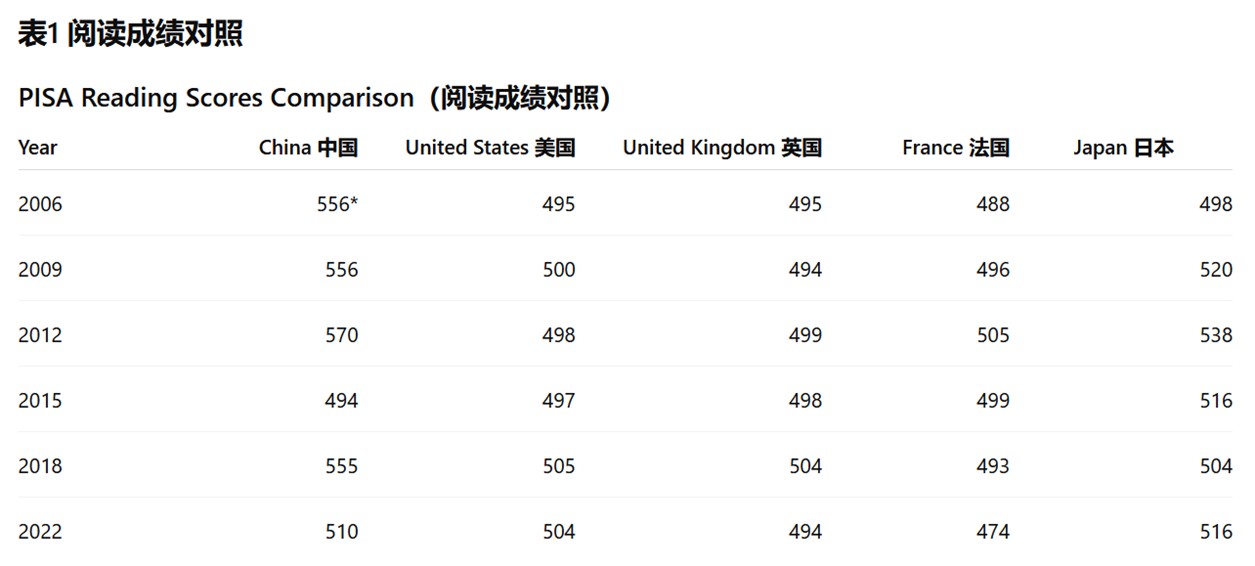
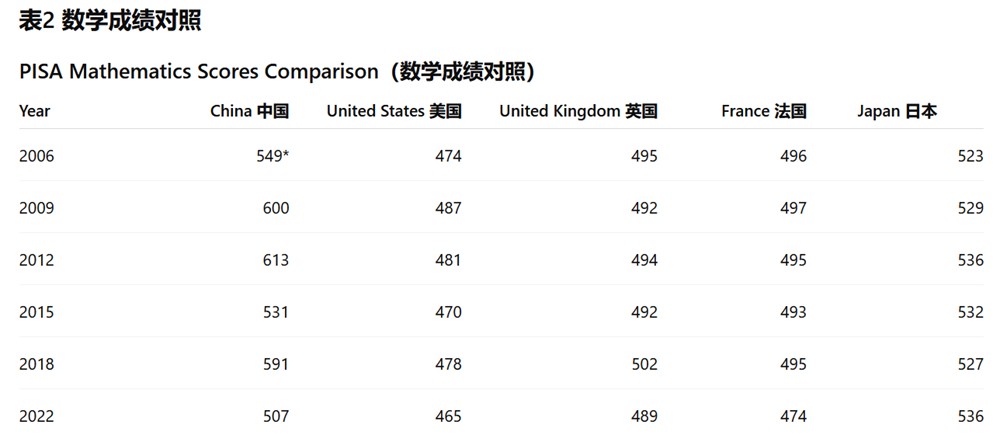
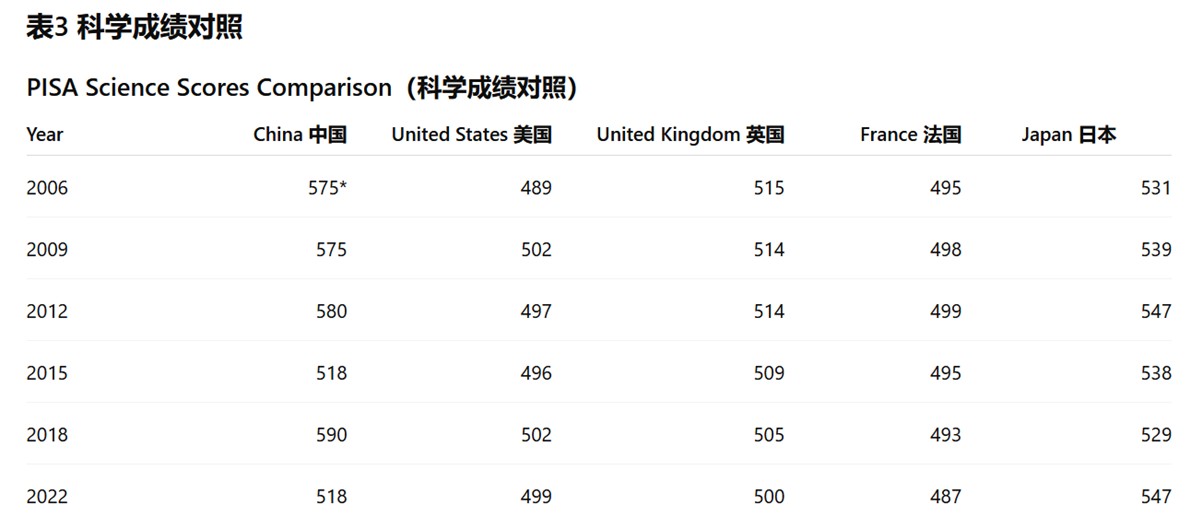
没有任何一个人会怀疑中国基础教育水平的国际地位。中国的中学教育水平在国际舞台上稳居世界顶尖梯队,其扎实的学术功底与卓越的人才培养质量,在近十年的国际权威测评与顶级学科竞赛中得到了充分印证。作为衡量全球基础教育质量的重要标尺,国际学生评估项目(PISA)的测试结果极具说服力。在2018年以及最新的2025年PISA测评中,由北京、上海、江苏、浙江四省市组成的中国代表团,均在数学、阅读和科学三项核心科目中斩获全球第一,各项平均分远超经合组织(OECD)国家的平均水平。这不仅证明了中国中学生在基础学力上的深厚积淀,更体现了他们在真实情境中灵活运用知识解决问题的突出能力。
No one would doubt the international status of China’s basic education level (or Chinese universities). The level of secondary education in China ranks among the top in the world on the international stage, and its solid academic foundation and excellent quality of talent cultivation have been fully confirmed in international authoritative assessments and top-level subject competitions in the past decade. As an important benchmark for measuring the quality of global basic education, the results of the Programme for International Student Assessment (PISA) are highly persuasive. In the 2018 and latest 2025 PISA assessments, the Chinese delegation consisting of Beijing, Shanghai, Jiangsu, and Zhejiang provinces and cities all achieved global first place in the three core subjects of mathematics, reading, and science, with average scores far exceeding the average level of OECD countries. This not only proves the profound accumulation of basic academic skills among Chinese middle school students, but also reflects their outstanding ability to flexibly apply knowledge to solve problems in real situations.
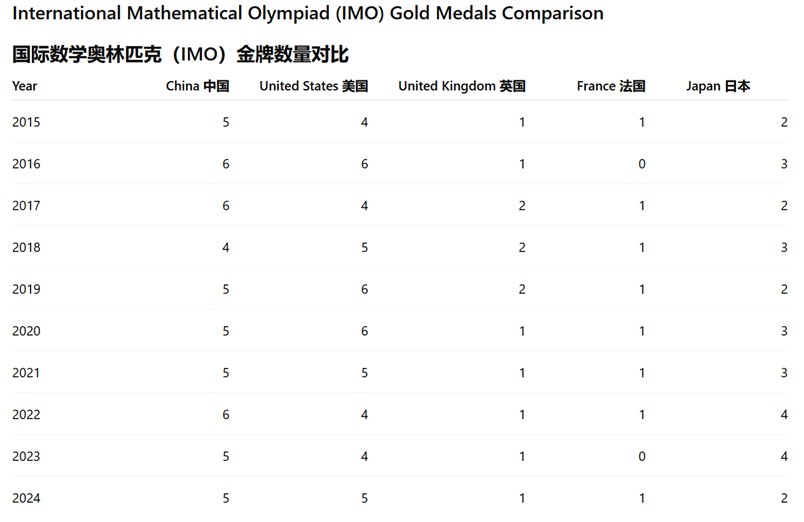
在国际奥林匹克竞赛的赛场上,中国中学教育在拔尖创新人才培养方面的成果同样斐然。近十年来,中国代表队在国际数学奥林匹克(IMO)等国际顶级赛事中长期保持绝对领先,不仅多次斩获团体总分第一,更屡次实现全员金牌的辉煌战绩。这种在超高难度学科竞赛中的统治级表现,充分展示了中国中学教育在逻辑思维训练和顶尖人才选拔方面的卓越实力。凭借在PISA测评中的全面领跑以及在奥林匹克竞赛中金牌数量的绝对优势,中国的中学教育无疑已确立了全球领先的地位,为世界基础教育树立了高质量的中国标杆。
On the international Olympic competition stage, China’s secondary education has also achieved remarkable results in cultivating top-notch innovative talents. In the past decade, the Chinese national team has maintained an absolute lead in top international competitions such as the International Mathematical Olympiad (IMO), not only winning first place in the team’s total score multiple times, but also achieving brilliant results of all team gold medals. This dominant performance in extremely difficult subject competitions fully demonstrates the outstanding strength of Chinese secondary education in logical thinking training and top talent selection. With its comprehensive leading position in PISA assessment and absolute advantage in the number of gold medals in Olympic competitions, China’s secondary education has undoubtedly established a global leading position and set a high-quality Chinese benchmark for world basic education.
站在2026年的节点回望,中国的高等教育在过去二十年里交出了一份令世界瞩目的“成绩单”。从全球各大权威排名来看,中国985大学早已不再是西方名校的“背景板”。然而,当我们拨开宏观数据的迷雾,深入到学生培养、师资教学与科研内核这三个最本质的维度时,会发现中国顶尖高校与世界一流的西方名校之间,依然存在着一种“形似而神未至”的微妙差距。这种差距,不再是简单的硬件或经费,而是深植于教育理念与学术生态中的结构性差异。
Looking back at the 2026 milestone, China’s higher education has delivered a remarkable “report card” that has caught the world’s attention over the past two decades. According to authoritative rankings from around the world, China’s 985 universities are no longer the “background board” for Western prestigious universities. However, when we break through the fog of macro data and delve into the three most essential dimensions of student training, faculty teaching, and research core, we will find that there is still a subtle gap between China’s top universities and world-class Western universities that is “similar in appearance but not yet fully realized”. This gap is no longer simply about hardware or funding, but a structural difference deeply rooted in educational philosophy and academic ecology.
在学生水平这一维度上,中国985大学呈现出鲜明的“入口极强、出口存疑”的特征。如果仅以高考成绩和入学门槛来衡量,清华、北大等顶尖985高校录取的学生,其数理基础与应试能力绝对处于全球同龄人的金字塔尖。然而,大学四年的“增值效应”却令人深思。根据斯坦福大学等机构发起的Supertest大规模研究显示,中国工科学生在经过大学学习后,批判性思维能力和学术技能水平不仅没有显著提升,反而出现了下降。相比之下,美国顶尖名校的学生在本科阶段参与教授课题组的比例极高,他们更早地接触到了真实的科研训练与思辨教育。中国学生往往在“高压刷题”中耗尽了探索的热情,而西方名校的学生则在“自由探索”中建立了跨学科的思维框架。这种“高分低能”的隐忧,正是我们在拔尖创新人才培养上必须直面的痛点。
In terms of student level, China’s 985 universities exhibit a distinct feature of “extremely strong entry and questionable exit”. If measured solely by college entrance examination scores and admission thresholds, students admitted to top 985 universities such as Tsinghua University and Peking University have a strong foundation in mathematics and physics, as well as excellent test taking abilities, which are definitely at the top of the pyramid among their peers worldwide. However, the “value-added effect” of four years of college is thought-provoking. According to a large-scale Supertest study initiated by institutions such as Stanford University, Chinese engineering students not only did not show significant improvement in critical thinking ability and academic skills after university studies, but also experienced a decline. In contrast, students from top American universities have a very high proportion of participation in teaching research groups during their undergraduate studies, and they are exposed to real scientific research training and critical thinking education earlier. Chinese students often exhaust their enthusiasm for exploration through high-pressure problem-solving, while students from prestigious Western universities establish interdisciplinary thinking frameworks through “free exploration”. The hidden worry of “high scores but low abilities” is precisely the pain point that we must face in cultivating top-notch innovative talents.
转向教学水平,中西方的差距主要体现在“育人理念”的代际差异上。在西方名校,教学的核心是“激发”与“对话”,教授们往往将大量精力投入到本科生的通识教育与思维启迪中,课堂是思想碰撞的广场。反观国内985高校,尽管近年来硬件设施已不输哈佛、牛津,但“重科研、轻教学”的绩效指挥棒依然顽固。许多顶尖学者忙于申请项目、追逐论文指标,本科课堂常常沦为“念PPT”的过场。此外,博士生培养模式也折射出这种差异:国内顶尖高校博士招生规模已是美国名校的数倍,但高强度的“工厂式”科研产出要求,使得中国博士生的导师关系满意度远低于全球平均水平。西方名校“小而精”的精英师徒制,虽然效率看似不高,却为学术思想的自由生长留出了宝贵的土壤。
Turning to the level of teaching, the gap between the East and the West is mainly reflected in the intergenerational differences in “educational concepts”. In Western prestigious universities, the core of teaching is “stimulation” and “dialogue”. Professors often devote a lot of energy to undergraduate general education and thinking enlightenment, and the classroom is a square for ideological collision. On the other hand, in China’s 985 universities, although their hardware facilities have not been inferior to Harvard and Oxford in recent years, the performance baton of “emphasizing scientific research and neglecting teaching” is still stubborn. Many top scholars are busy applying for projects and chasing paper targets, and undergraduate classes often become a passing scene for “reading PPTs”. In addition, the doctoral training model also reflects this difference: the doctoral enrollment scale of top universities in China is several times that of prestigious universities in the United States, but the high-intensity “factory style” research output requirements make the satisfaction of Chinese doctoral students’ mentor relationships far lower than the global average. The elite mentorship system of small but refined Western universities, although seemingly inefficient, has provided valuable soil for the free growth of academic ideas.
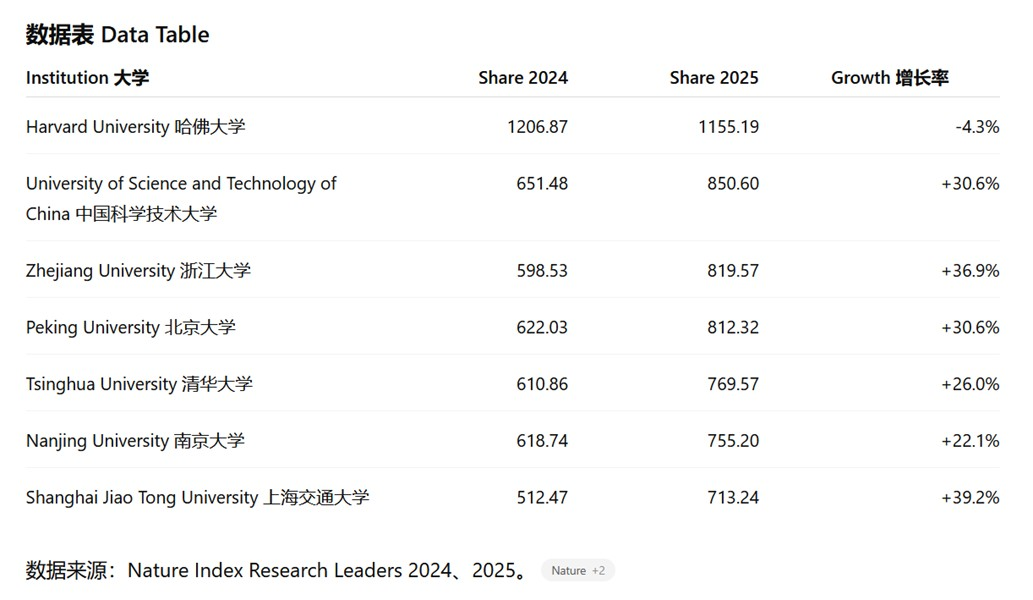
在科研水平维度,中国985大学无疑已经实现了从“跟跑”到“并跑”甚至部分“领跑”的跨越。2026年的数据显示,在自然指数(Nature Index)等以学术产出为核心的榜单中,浙江大学、上海交通大学等中国高校已经超越了哈佛大学,占据了全球学术生产力的制高点。中国在人工智能、新能源、量子信息等前沿领域的论文发表量和高被引成果呈现井喷之势。但我们必须清醒地认识到,这种优势更多体现在“量”的积累与“应用”的突破上。在真正具有颠覆性、原创性的基础理论领域,西方名校依然掌握着绝对的话语权。国内高校在“绩效网格化”的考核体制下,催生了大量符合参数指标的“标准件”论文,而真正敢于挑战学术禁区、进行长周期冷门研究的“孤独思想者”依然稀缺。学术土壤的“板结化”,让我们在冲击诺贝尔奖级别的顶尖成果时,依然显得底气不足。
In terms of research level, China’s 985 universities have undoubtedly achieved a leap from “following” to “running in parallel” or even partially “leading”. According to data from 2026, Chinese universities such as Zhejiang University and Shanghai Jiao Tong University have surpassed Harvard University in rankings such as the Nature Index that focus on academic output, occupying the high ground of global academic productivity. China’s publication volume and highly cited achievements in cutting-edge fields such as artificial intelligence, new energy, and quantum information are showing a surge. But we must soberly recognize that this advantage is more reflected in the accumulation of “quantity” and breakthroughs in “application”. In the truly disruptive and original field of fundamental theory, Western prestigious schools still hold absolute discourse power. Under the performance grid based assessment system, domestic universities have produced a large number of “standard papers” that meet the parameter indicators, while “lonely thinkers” who dare to challenge academic forbidden areas and conduct long-term obscure research are still scarce. The “hardening” of academic soil still leaves us lacking confidence in striving for top achievements at the Nobel Prize level.
综上所述,2026年的中国985大学,在硬指标上已经具备了与西方名校掰手腕的实力,甚至在科研产出的规模上实现了反超。然而,教育的本质是“人”的塑造,科研的灵魂是“思想”的原创。我们与西方名校的真正差距,在于是否拥有宽容失败、鼓励慢思考的学术生态,在于是否真正将学生的批判性思维置于知识灌输之上。缩小这一差距,需要的不仅仅是持续增加的经费投入,更是一场关于大学精神与评价体系的深刻自我革命。唯有如此,中国的高校才能真正从“论文大国”迈向“思想强国”。
In summary, by 2026, China’s 985 universities will have the strength to compete with Western prestigious universities in terms of hard indicators, and even surpass them in terms of research output scale. However, the essence of education is the shaping of ‘people’, and the soul of scientific research is the originality of ‘ideas’. The real gap between us and Western prestigious schools lies in whether we have an academic ecology that tolerates failure and encourages slow thinking, and whether we truly prioritize students’ critical thinking over knowledge transmission. Narrowing this gap requires not only continuous increase in funding, but also a profound self revolution about the spirit and evaluation system of universities. Only in this way can Chinese universities truly move from being a “paper powerhouse” to a “intellectual powerhouse”.