Physical Address
304 North Cardinal St.
Dorchester Center, MA 02124
Physical Address
304 North Cardinal St.
Dorchester Center, MA 02124

Hai la risposta. У тебя есть ответ. คุณมีคำตอบแล้ว. آپ کے پاس جواب ہے.
Hai la risposta. У тебя есть ответ. คุณมีคำตอบแล้ว. آپ کے پاس جواب ہے.
2024-2025学年在华留学生超38万,增长15%。In the 2024-2025 academic year, the number of international students who study in China exceeded 380,000, marking a 15% increase. В 2024-2025 учебном году число иностранных студентов в Китае превысило 380 тысяч, увеличившись на 15%.
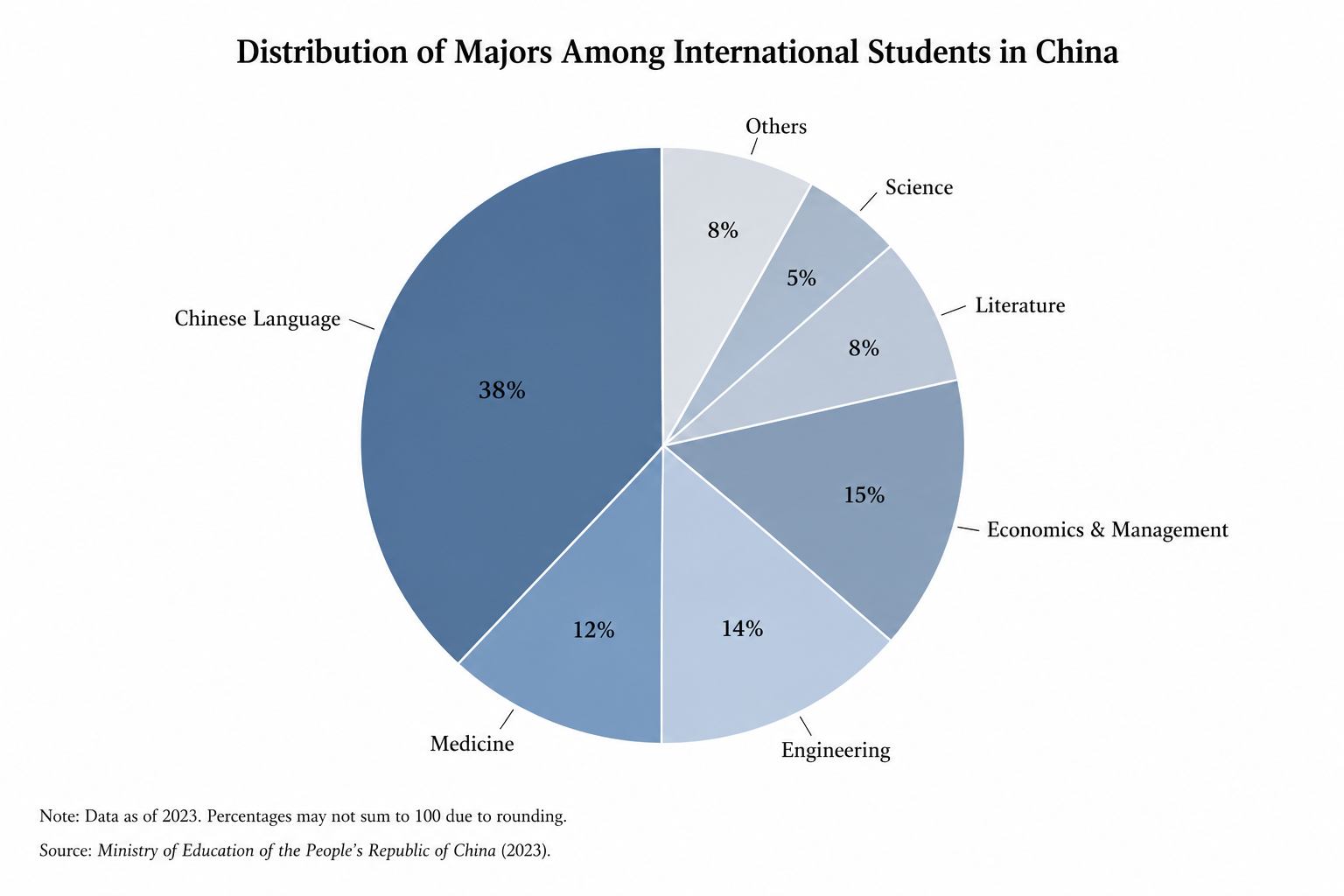
根据2026年4月发布的数据,在2024-2025学年,共有来自191个国家和地区的 38万余名 国际学生在中国学习,较上一学年增长了15%。这些留学生在1100余所高等院校及科研机构中学习。其中中国政府奖学金生占比约8%;生源结构上,亚洲学生占比61.1%,非洲学生16.2%,欧洲学生15.6%,美洲和大洋洲学生7.1%。学历层次上,学历生共计20.5万人,其中研究生数量占比达35%。专业类别上,工学类专业人数排名第一,占学历生总数的27.8%。
According to data released in April 2026, during the 2024-2025 academic year, over 380,000 international students from 191 countries and regions study in China, marking a 15% increase compared to the previous academic year. These international students study at over 1,100 institutions of higher learning and research. Among them, students receiving Chinese government scholarships accounted for approximately 8%. In terms of student origin structure, Asian students accounted for 61.1%, African students for 16.2%, European students for 15.6%, and students from the Americas and Oceania for 7.1%. In terms of educational level, there were a total of 205,000 degree-seeking students, with graduate students accounting for 35%. In terms of major categories, engineering majors ranked first, accounting for 27.8% of the total number of degree-seeking students.
从分布区域来看,在华留学生的分布呈现出显著的“东密西疏”但“多点开花”的格局,高度集中于经济发达、教育资源富集且对外开放程度高的地区。东部沿海地区无疑是留学生最主要的聚集地,这里不仅拥有中国最顶尖的高等学府,也是跨国企业与国际贸易的中心。其中,京津冀地区依托北京作为政治文化中心的独特地位,以及长三角地区凭借上海的经济辐射力,吸引了最大比例的学历生和进修生。
From the perspective of distribution regions, the distribution of international students in China exhibits a pattern of being densely concentrated in the east and sparsely distributed in the west, yet with “flowering at multiple points.” They are highly concentrated in regions with developed economies, abundant educational resources, and a high degree of openness to the outside world. The eastern coastal areas are undoubtedly the primary gathering place for international students. These areas not only host China’s top universities but are also centers for multinational corporations and international trade. Among them, the Beijing-Tianjin-Hebei region, relying on Beijing’s unique status as a political and cultural center, and the Yangtze River Delta region, leveraging Shanghai’s economic radiation, attract the largest proportion of degree-seeking and further education students.
与此同时,粤港澳大湾区凭借地缘优势和活跃的商贸环境,成为特别是来自东南亚、非洲及欧美留学生的重要目的地。随着“一带一路”倡议的深入推进,中西部核心城市正逐渐成为新的增长极,武汉、成都、重庆、西安等地凭借高性价比的生活成本、深厚的历史底蕴以及在理工科、医学等领域的学科优势,正在打破传统的沿海垄断格局,吸引着越来越多寻求高质量教育与低成本生活平衡的国际学生。
Meanwhile, the Guangdong-Hong Kong-Macao Greater Bay Area, with its geographical advantages and vibrant business environment, has become an important destination, especially for international students from Southeast Asia, Africa, Europe, and America. With the in-depth promotion of the “Belt and Road” initiative, core cities in the central and western regions are gradually becoming new growth poles. Places such as Wuhan, Chengdu, Chongqing, and Xi’an, with their cost-effective living costs, profound historical heritage, and disciplinary advantages in fields such as science, engineering, and medicine, are breaking the traditional coastal monopoly pattern and attracting an increasing number of international students seeking a balance between high-quality education and low-cost living.
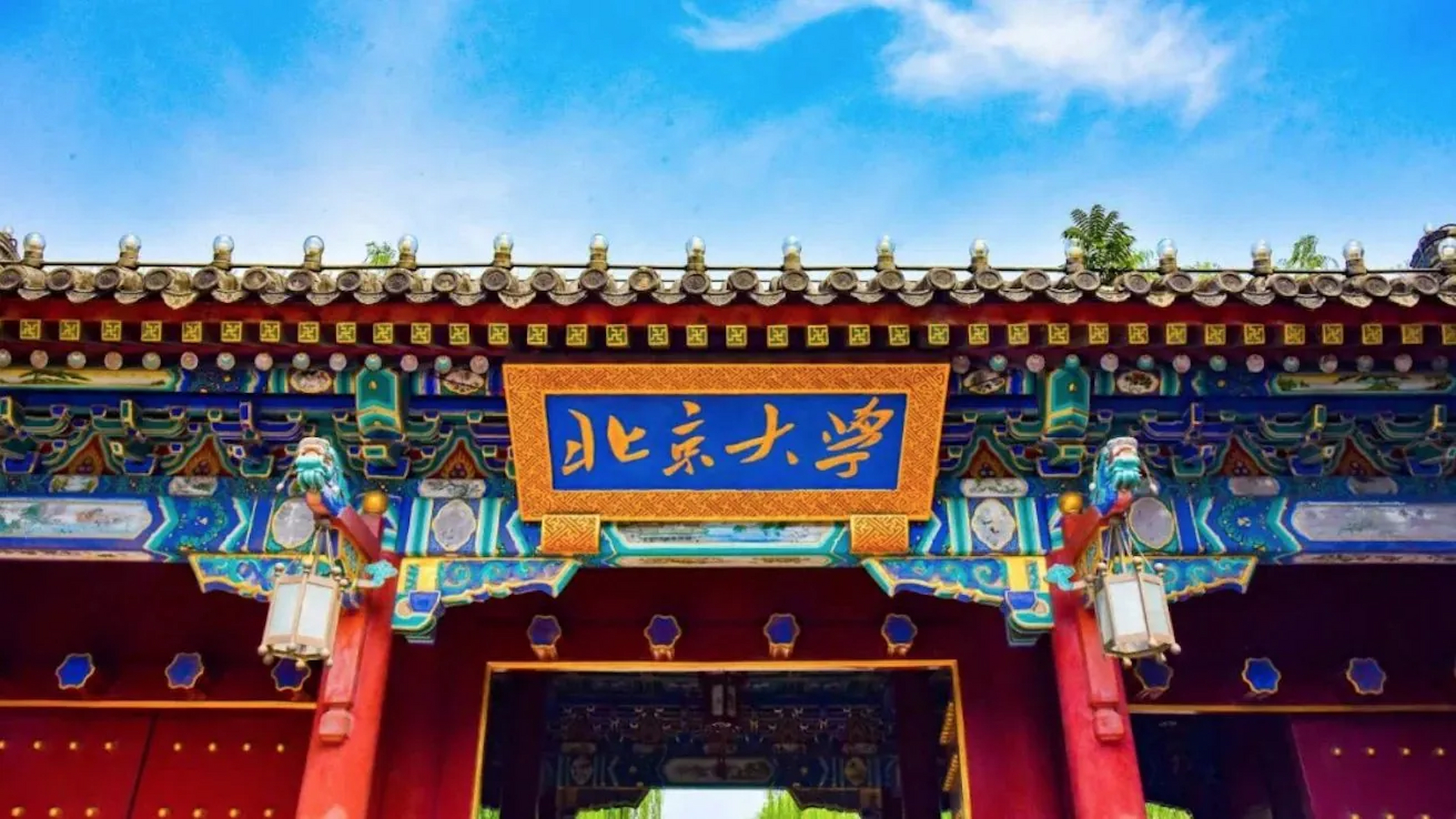
具体落实到城市层面,北京和上海构成了第一梯队,拥有绝对的数量优势。这两座城市云集了清华、北大、复旦、上交等“双一流”名校,是韩国、俄罗斯、美国及欧洲留学生首选的学术深造地。紧随其后的是广州、深圳、南京、杭州等新一线及沿海开放城市,这些城市产业特色鲜明,为留学生提供了丰富的实习与就业想象空间。值得注意的是,部分省会城市因特定的学科优势而异军突起,例如天津、重庆及南方医科大学所在地的广州在医学领域吸引了大量印度、巴基斯坦等南亚国家的留学生;而哈尔滨、长春等东北城市则因地缘关系成为俄罗斯留学生的主要聚居区。
When it comes to cities, Beijing and Shanghai constitute the first tier, boasting an absolute numerical advantage. These two cities are home to prestigious “Double First-Class” universities such as Tsinghua University, Peking University, Fudan University, and Shanghai Jiao Tong University, making them the top choice for academic further studies for international students from South Korea, Russia, the United States, and Europe. Following closely behind are new first-tier cities and coastal open cities such as Guangzhou, Shenzhen, Nanjing, and Hangzhou, which have distinct industrial characteristics and provide international students with abundant opportunities for internships and employment. It is worth noting that some provincial capitals have emerged as prominent destinations due to their specific disciplinary advantages. For example, Tianjin, Chongqing, and Guangzhou, where Southern Medical University is located, attract a large number of international students from South Asian countries such as India and Pakistan in the medical field; while northeastern cities such as Harbin and Changchun have become major settlements for Russian international students due to their geographical proximity.
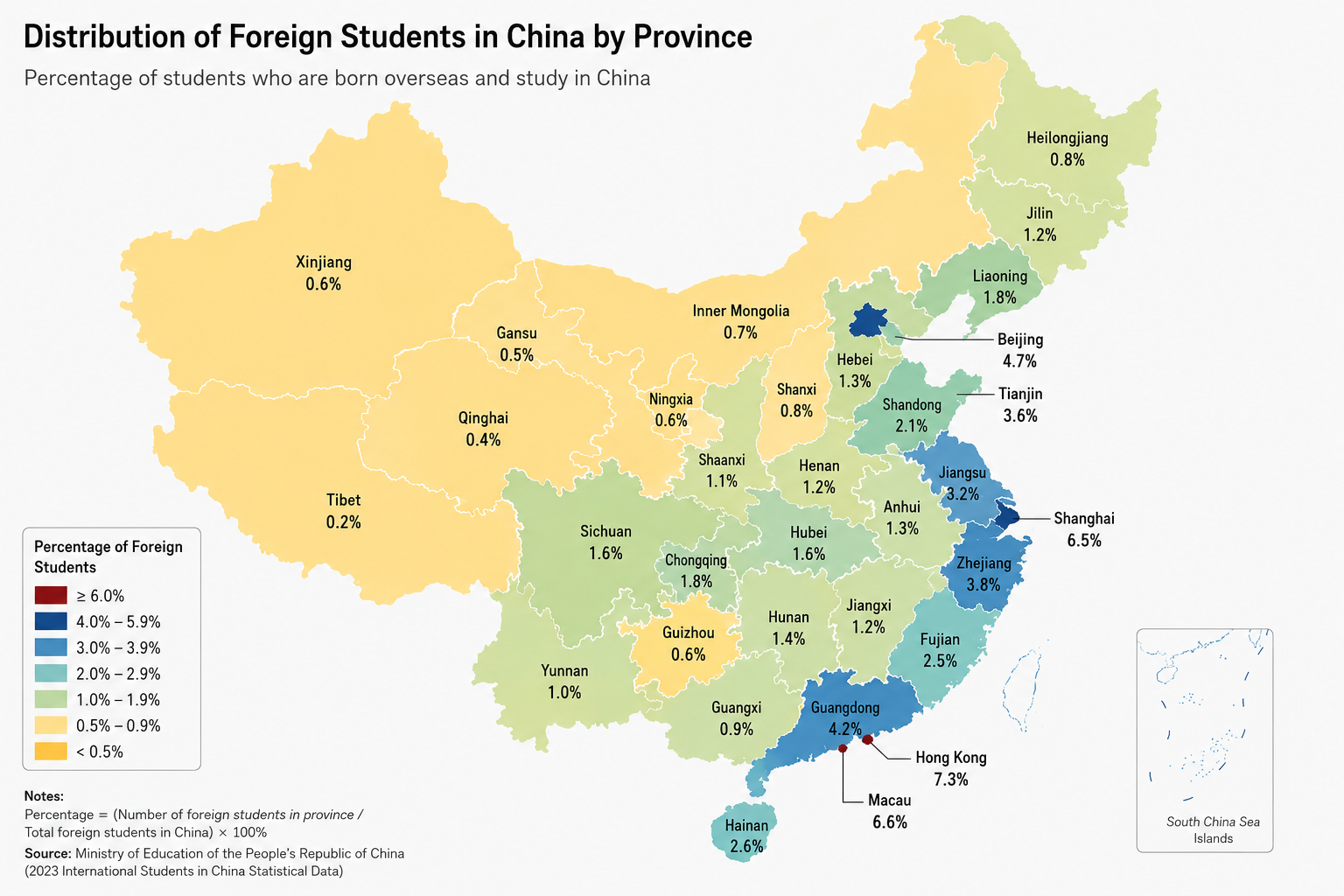
总体而言,留学生的城市选择与中国城市的国际化水平、产业结构以及高校的学科实力呈高度正相关,形成了以一线城市为核心,特色省会城市为支撑的广泛分布网络。
Overall, international students’ city choices are highly correlated with the internationalization level, industrial structure, and disciplinary strength of universities in Chinese cities, forming a widely distributed network centered around first-tier cities and supported by distinctive provincial capitals.